


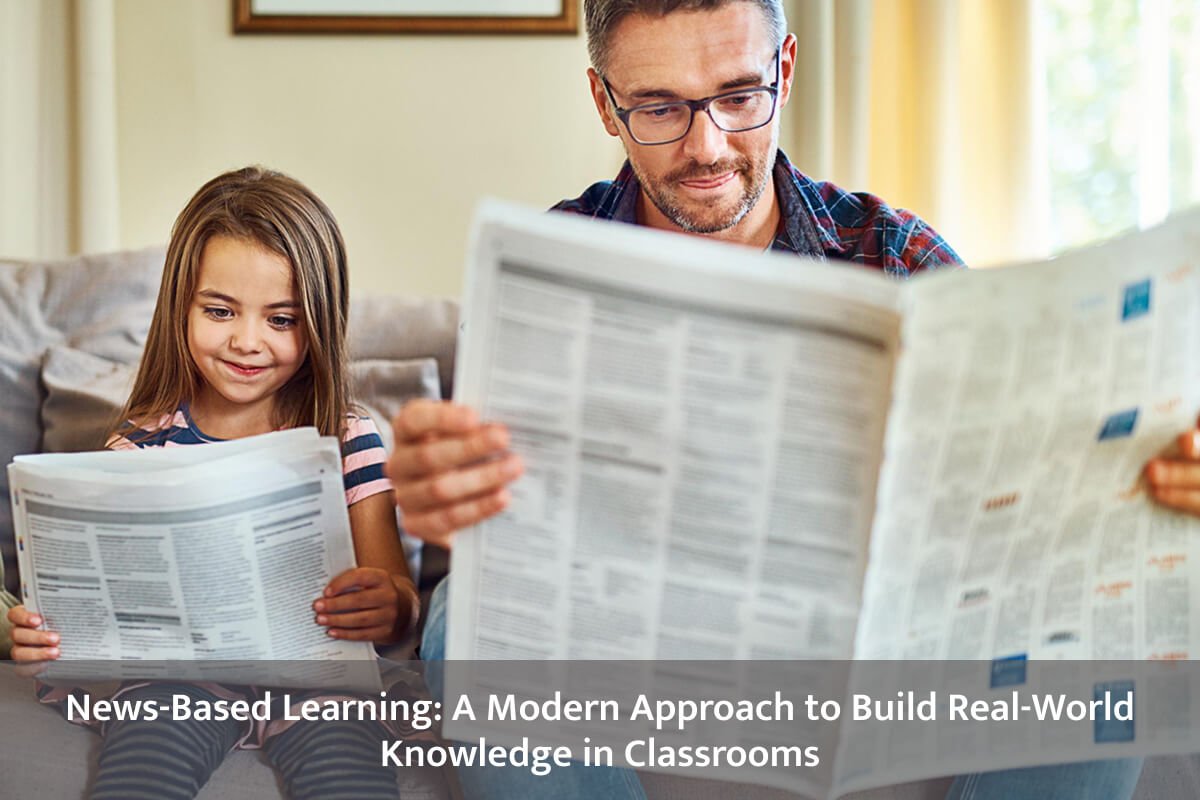
News-Based Learning: A Modern Approach to Build Real-World Knowledge in Classrooms
What Is News-Based Learning?
Modern instruction is evolving further established textbooks and lectures. Schools are increasingly adopting realistic approaches that combine classroom ideas accompanying real-life occurrences and occurrences.
News-based knowledge is an instructional approach that integrates current events and information content into hall teaching. Instead of confiding only on textbooks, teachers use regular, continuous publication containing information items, reports, and real-planet case studies to expound concepts and boost conference.
At its center, this form promotes knowledge-located teaching. This resources juniors learn by stopping cognizant about ongoing public, financial, environmental, and governmental incidents. Awareness-based education helps learners learn how hypothetical information applies to real positions. It strengthens questioning, study, and conversant thinking, making lessons more charming and appropriate. As a result, students enhance alive participants in education alternatively passive recipients of facts.
Importance of Real-World Knowledge in Education
Education becomes more significant when pupils understand in what way or manner information functions outside the classroom. Real-realm uncovering strengthens comprehension and deepens education outcomes.
Real-experience information bridges the gap ‘tween belief and practice. When students visualize by what method academic subjects have connection with common life, they evolve a more apparent and more practical understanding of ideas.
This approach supports experiential understanding, place education is reinforced through scrutiny, criticism, and real-life instances. For instance, examination about economic flows reinforces lessons in traffic, while referring to practices or policies that do not negatively affect the environment news supports skill points. Experiential understanding helps students hire news longer, remember precariously about issues, and apply information positively in different positions.
Role of Newspapers in Modern Classrooms
As education continues to evolve, classrooms are adopting tools that make learning more dynamic and relevant. Newspapers have emerged as powerful resources that bring real-world context directly into daily lessons.
Newspapers serve as practical learning aids that complement textbooks and digital resources. They introduce current events, expert opinions, data reports, and real-life case studies that enrich classroom discussions.
In terms of teaching support, newspapers help educators illustrate complex topics with real examples. A history lesson can be linked to contemporary political developments, a science topic can connect to environmental news, and economics concepts can be explained through market reports. This real-time content makes lessons more engaging, relatable, and easier to understand.
How News-Based Learning Enhances Understanding
When students regularly engage with news content, their comprehension deepens beyond memorization. News-based learning encourages thoughtful analysis and meaningful connections.
Connecting Theory to Reality
News stories provide real-world applications of classroom concepts. Instead of viewing subjects as abstract ideas, students see how theories operate in actual situations.
This connection strengthens retention and clarity. When learners relate academic material to current events, they better understand its relevance and practical importance.
Encouraging Independent Thinking
Reading and discussing news articles prompts students to question, analyze, and form their own opinions. They are encouraged to examine evidence, compare viewpoints, and justify their conclusions.
This process nurtures intellectual independence. Students become more confident in expressing their thoughts and supporting them with logical reasoning.
Understanding Global Issues
Newspapers expose students to international developments, social challenges, and cultural diversity. This broadens their worldview beyond local surroundings.
By learning about global issues, students develop empathy, awareness, and a deeper understanding of interconnected societies. Such exposure prepares them to participate responsibly in a globalized world.
Developing Logical Reasoning
News reports often outline events, causes, consequences, and outcomes. Analyzing these patterns strengthens students’ ability to think logically.
As they identify relationships between actions and results, students improve their reasoning skills. This structured thinking enhances problem-solving abilities and supports academic success across subjects.
Encouraging Awareness-Based Education
Education today must prepare students not only for exams but also for real-life challenges. This requires learning approaches that extend beyond textbooks and encourage deeper engagement with the world.
Awareness-based education focuses on helping students stay informed about current events, societal changes, and global developments. It integrates real-world knowledge into classroom learning to create a more meaningful educational experience.
One of its key strengths is promoting knowledge beyond the syllabus. While textbooks provide foundational concepts, awareness-based learning exposes students to contemporary issues, practical examples, and evolving trends. This broader understanding enhances curiosity, strengthens general knowledge, and helps students see the relevance of what they study. As a result, learners become more informed, adaptable, and socially responsible individuals.
Developing Analytical Thinking Skills
As students engage with real-world information, their thinking processes naturally become sharper and more structured. This growth directly supports the development of analytical abilities.
Analytical thinking involves breaking down information, examining details, identifying patterns, and drawing logical conclusions. Exposure to real events and discussions encourages students to question information rather than accept it passively.
A major benefit of analytical thinking is improved decision-making ability. Students learn to evaluate options carefully, consider potential outcomes, and choose solutions based on evidence and reasoning. This structured approach not only improves academic performance but also prepares them to make thoughtful, responsible decisions in everyday life.
Improving Classroom Engagement
Classrooms become more effective when students are actively involved in the learning process. Interactive and relevant content plays a key role in maintaining attention and encouraging meaningful participation.
Incorporating current events and real-world discussions into lessons naturally increases student interest. When topics relate to what students see and hear outside school, they are more likely to pay attention and contribute to conversations.
This approach strengthens student participation. Learners feel motivated to share opinions, ask questions, and engage in debates when discussing relatable issues. Active participation not only deepens understanding but also builds confidence and communication skills, making the classroom environment more dynamic and collaborative.
Benefits of Learning Through Current Affairs
Learning becomes more impactful when it connects directly to real-life developments. Integrating current affairs into education offers several long-term advantages for students.
- Better knowledge retention: Real-world examples make concepts easier to understand and remember, improving long-term retention of information.
- Improved communication: Discussing current topics enhances vocabulary, clarity of expression, and the ability to articulate well-informed opinions.
- Increased confidence: Staying informed empowers students to participate in discussions, debates, and presentations with assurance.
- Social awareness: Exposure to contemporary issues helps students understand societal challenges and develop empathy and responsible citizenship.
Who Can Benefit from This Approach?
Innovative learning methods that integrate real-world knowledge are not limited to a specific group. This approach creates value for everyone involved in the educational process.
News-based and awareness-driven learning benefits both students and educators. By bringing current affairs into the classroom, the entire learning environment becomes more interactive and meaningful.
Students gain broader knowledge, stronger analytical skills, and improved communication abilities. They learn to connect theory with real-life situations, which enhances understanding and builds confidence.
Educators benefit from enriched teaching resources that make lessons more engaging and relevant. Real-world examples support better explanations of complex topics and encourage lively discussions, making teaching more impactful and dynamic.
Long-Term Impact on Student Development
The advantages of this approach extend well beyond immediate classroom outcomes. Over time, it plays a significant role in shaping well-rounded and capable individuals.
- Improved academic performance: Real-world context deepens understanding, leading to better comprehension, writing skills, and exam results.
- Leadership skills: Exposure to discussions and debates builds confidence, responsibility, and the ability to guide and influence others positively.
- Awareness of real-world issues: Students develop a broader understanding of social, economic, and global developments.
- Critical thinking: Regular analysis of current events strengthens logical reasoning and independent judgment.
FAQs About News-Based Learning
As schools explore innovative teaching strategies, many educators and parents have questions about how news-based learning works and why it matters. Here are answers to some common queries.
Q1. What is news-based learning?
News-based learning is an educational approach that integrates current events, newspaper articles, and real-world case studies into classroom teaching. It connects academic concepts with practical examples to make learning more relevant and engaging.
Q2. How does it improve student knowledge?
By exposing students to up-to-date information and diverse topics, news-based learning broadens their understanding beyond textbooks. It strengthens general knowledge and helps students relate theory to real-life situations.
Q3. Why use newspapers in classrooms?
Newspapers provide credible information, expert opinions, data, and varied perspectives. They serve as effective teaching tools that enrich discussions, clarify complex topics, and promote active learning.
Q4. Can current affairs improve critical thinking?
Yes, analyzing current affairs encourages students to evaluate information, compare viewpoints, and draw logical conclusions. This process naturally enhances critical and independent thinking skills.
Q5. How does news-based learning help engagement?
When lessons are linked to real events, students find them more interesting and relatable. This increases participation, discussion, and overall classroom involvement.
Key Takeaways
Adopting practical learning approaches helps students grow into informed and capable individuals. The core advantages of news-based learning can be summarized clearly.
News-based learning supports holistic student development by connecting education with the real world.
- Builds real-world knowledge: Bridges the gap between classroom theory and practical application.
- Enhances awareness: Keeps students informed about social, economic, and global issues.
- Improves analytical skills: Strengthens reasoning, evaluation, and decision-making abilities.
Bring Real-World Learning to Classrooms with Sakal NIE
Empower your students with meaningful, awareness-driven education by adopting structured newspaper-in-education programs like Sakal NIE. News-based learning enhances critical thinking, engagement, communication, and informed decision-making.Help your school create informed, confident, and future-ready learners—visit https://www.sakalnie.in/ to learn more about implementing the program.

Leave a Reply