


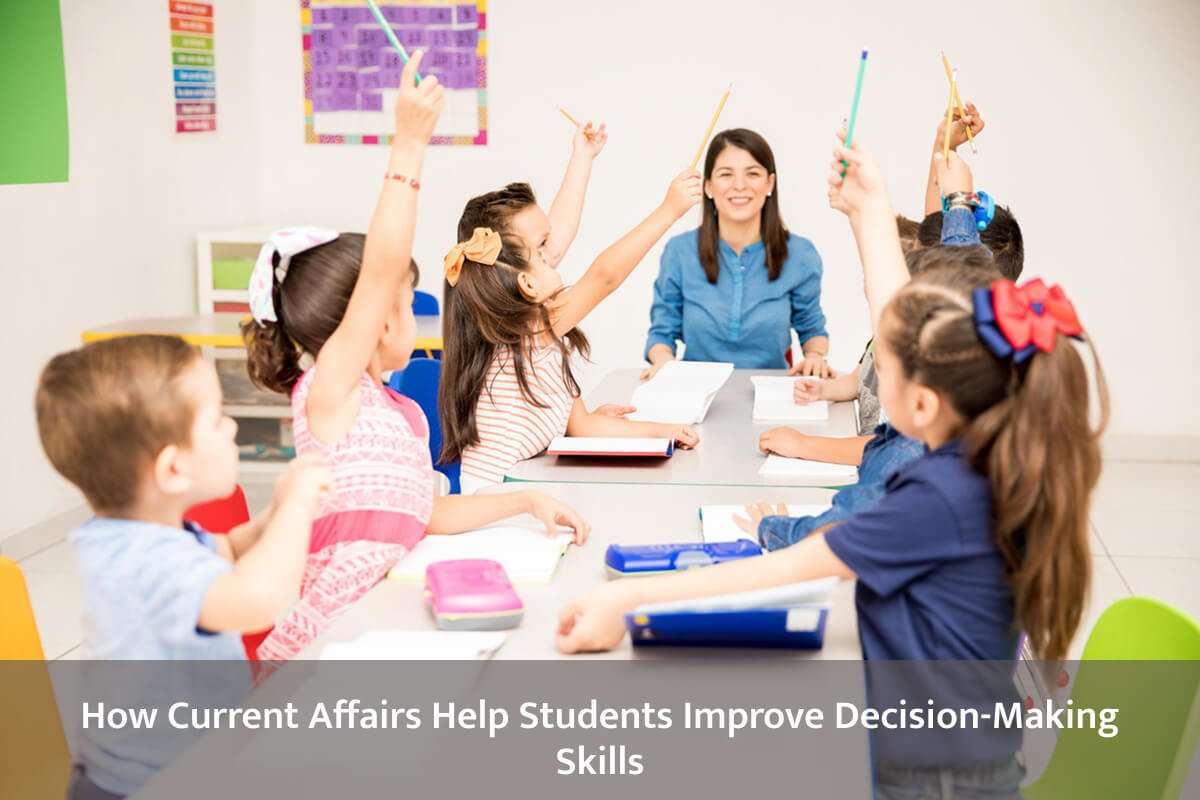
How Current Affairs Help Students Improve Decision-Making Skills
What Are Decision-Making Skills?
Every day, graduates are confronted with selections—academic, public, and personal. Developing the talent to form thoughtful and trustworthy resolutions is an basic facts of their overall growth.
Decision-making abilities concern the ability to select best choice method after cautiously taking everything in mind available alternatives. These abilities involve accumulation facts, judging alternatives, foreseeing attainable outcomes, and selecting a resolution established reason and evidence.
At the heart of decision-making lies the skill to form reasonable choices. Logical selections are established facts, study, and clear interpretation rather than feelings or peer pressure. Students the one contemplate logically consider the expert and cons of each option, grant temporary and general consequences, and pick conduct that align accompanying their aims and values. This organized thinking reduces abrupt conclusions and promotes accountable act.
Importance of Decision-Making in Students
As students evolve, their determinations begin to shape their academic courses and individual growth. Strengthening decision-making skills early prepares ruling class for future challenges.
Decision-making is a crucial existence ability that influences two together academic success and private happiness. From managing opportunity efficiently to choosing issues or answering conflicts, scholars constantly depend their capability to make sound judgments.
Strong accountable abilities support essential life abilities in the way that logical, responsibility, freedom, and abstinence. Students who can judge positions tenderly are better equipped to handle pressure, readjust to change, and take responsibility for their actions. Over occasion, these talents contribute to assurance, adulthood, and complete success in two together individual and professional life.
Role of Current Affairs in Learning
Education becomes more meaningful when students understand how classroom knowledge connects to the world around them. Integrating current affairs into learning helps bridge the gap between theory and reality.
Current affairs play a vital role in shaping informed and aware students. By discussing ongoing events in society, politics, science, environment, and economics, teachers help learners stay connected with real-world developments.
This approach promotes awareness-based education, where learning extends beyond textbooks to include real-time issues and practical examples. Awareness-based education encourages curiosity, discussion, and critical analysis. It helps students understand how academic subjects apply to everyday life, making lessons more relevant, engaging, and impactful.
How News Develops Decision-Making Ability
Exposure to real events naturally sharpens students’ thinking processes. When learners analyze news stories, they begin to develop stronger and more structured decision-making abilities.
Understanding Consequences
News stories often highlight the outcomes of actions taken by individuals, communities, or governments. By examining these real-life examples, students learn to identify cause-and-effect relationships.
This helps them understand that every decision carries consequences. Recognizing potential outcomes encourages students to think carefully before making choices in their own lives.
Evaluating Information
News articles present data, expert opinions, and multiple viewpoints. Students must assess the credibility of sources and determine the reliability of information.
This practice strengthens their ability to analyze facts critically. Evaluating information carefully supports informed and responsible decision-making.
Comparing Perspectives
Many news topics involve differing opinions and debates. When students explore multiple perspectives, they learn that complex issues rarely have simple answers.
Comparing viewpoints helps them weigh alternatives objectively. This balanced approach improves judgment and supports thoughtful choices.
Logical Thinking
Following news reports requires understanding sequences of events, patterns, and logical arguments. Students learn to connect evidence with conclusions.
This strengthens logical thinking skills, enabling them to assess situations methodically. As a result, they become more confident and capable decision-makers in academic and real-life contexts.
Understanding Real-World Situations
Learning becomes more powerful when students can relate academic concepts to everyday life. Exposure to real-world contexts helps them understand how knowledge functions beyond the classroom.
Students benefit greatly when they are aware of what is happening around them in society, the economy, science, and the environment. Understanding real-world situations allows them to connect lessons to current events and practical examples.
This builds practical awareness, which is the ability to apply knowledge in real-life contexts. Practical awareness helps students interpret situations more accurately, respond thoughtfully to challenges, and make informed decisions. Instead of viewing subjects as isolated topics, they begin to see how different areas of knowledge interact in everyday life.
Encouraging Analytical Thinking
As students engage with real-world information, their ability to think deeply and logically becomes stronger. This naturally leads to the development of analytical skills.
Analytical thinking involves examining information carefully, breaking it into parts, and identifying relationships between ideas. Encouraging students to question, compare, and evaluate information strengthens this important skill.
Developing strong reasoning skills enables students to draw logical conclusions based on evidence rather than assumptions. They learn to assess arguments, identify patterns, and consider multiple solutions before making decisions. These reasoning abilities not only enhance academic performance but also prepare students to handle complex situations with confidence and clarity.
Benefits of Awareness-Based Education
Education becomes more meaningful when students are aware of the world around them. Awareness-based education strengthens both academic learning and personal development by connecting knowledge to real-life contexts.
When students are encouraged to stay informed and think critically about current issues, they gain skills that extend beyond textbooks.
- Improved confidence: Staying informed enables students to speak clearly in discussions, share opinions, and participate actively without hesitation.
- Better judgment: Exposure to real-world examples helps students evaluate situations carefully and make balanced, thoughtful decisions.
- Increased awareness: Students develop a deeper understanding of social, economic, and global issues, fostering responsible citizenship.
- Problem-solving skills: Analyzing real events encourages logical thinking and structured approaches to handling challenges.
Classroom Discussions Using Current Affairs
Incorporating current affairs into lessons also transforms the classroom environment. It creates opportunities for meaningful dialogue and collaborative learning.
Using current events as discussion topics makes learning interactive and engaging. Students are naturally more interested when conversations relate to real situations they encounter outside school.
This approach significantly enhances student participation. Learners are motivated to ask questions, express viewpoints, debate respectfully, and listen to differing opinions. Active participation not only deepens understanding but also strengthens communication skills, critical thinking, and confidence within the classroom setting.
H2: Who Can Benefit from News Reading?
Reading the news is a simple yet powerful habit that supports continuous learning. Its benefits extend across age groups and academic levels, making it a valuable practice for many learners.
News reading is beneficial for a wide range of individuals, especially those involved in education. It supports intellectual growth, awareness, and informed thinking.
The primary target audience includes school students, college learners, and competitive exam aspirants who need strong general knowledge and analytical skills. Educators also benefit by using news content to enrich classroom discussions and provide real-world examples. Additionally, young professionals and lifelong learners can use news reading to stay informed, improve communication skills, and make better decisions. Overall, anyone seeking to expand their understanding of the world can gain from this habit.
Long-Term Impact on Student Development
The habit of reading news regularly does more than provide short-term information. Over time, it plays a significant role in shaping well-rounded and capable individuals.
Consistent engagement with news content contributes to holistic growth and lifelong skills.
- Better academic performance: Real-world examples enhance comprehension, writing ability, and subject understanding, leading to stronger academic results.
- Improved leadership skills: Awareness and informed opinions build confidence, responsibility, and the ability to guide discussions effectively.
- Social awareness: Students develop a broader understanding of societal challenges and global developments, fostering empathy and responsible citizenship.
- Critical thinking: Analyzing news stories strengthens logical reasoning, evaluation skills, and independent judgment.
FAQs About Current Affairs Learning
As current affairs become an essential part of modern education, students and educators often have questions about their practical value. Understanding these benefits helps clarify why staying informed is important for overall development.
Q1. How do current affairs improve decision-making?
Current affairs expose students to real-life situations, policies, and outcomes. By analyzing these examples, learners understand cause-and-effect relationships and evaluate different solutions. This strengthens their ability to make informed and logical decisions.
Q2. Why should students follow the news?
Following the news keeps students updated about social, economic, scientific, and global developments. It broadens their knowledge beyond textbooks and helps them stay aware of the world they are part of.
Q3. Can current affairs improve critical thinking?
Yes, engaging with current affairs encourages students to question information, compare perspectives, and assess evidence. This process naturally enhances analytical and critical thinking skills.
Q4. What are the benefits of awareness-based learning?
Awareness-based learning improves confidence, strengthens judgment, increases social understanding, and supports better problem-solving abilities. It prepares students to participate actively and responsibly in society.
Q5. How does news help real-world learning?
News connects classroom concepts to practical examples. By relating theory to actual events, students gain a clearer and more experiential understanding of subjects, making learning more meaningful and lasting.
Key Takeaways
Integrating current affairs and awareness-based learning into education creates well-informed, confident, and capable students. The core benefits can be summarized as follows:
- Improves decision-making: Exposure to real-world examples helps students evaluate options carefully and choose logically.
- Enhances awareness: Staying informed builds a deeper understanding of social, economic, and global issues.
- Builds analytical skills: Regular analysis of news strengthens reasoning, critical thinking, and problem-solving abilities.
Strengthen Student Skills with Sakal NIE Programs
Schools can empower learners by adopting structured newspaper-in-education initiatives like Sakal NIE. Through awareness-based learning, students develop stronger decision-making abilities, sharper analytical thinking, and real-world understanding.Help your students grow into informed and confident decision-makers—visit https://www.sakalnie.in/ to learn more about implementing the program in your school.

Leave a Reply