


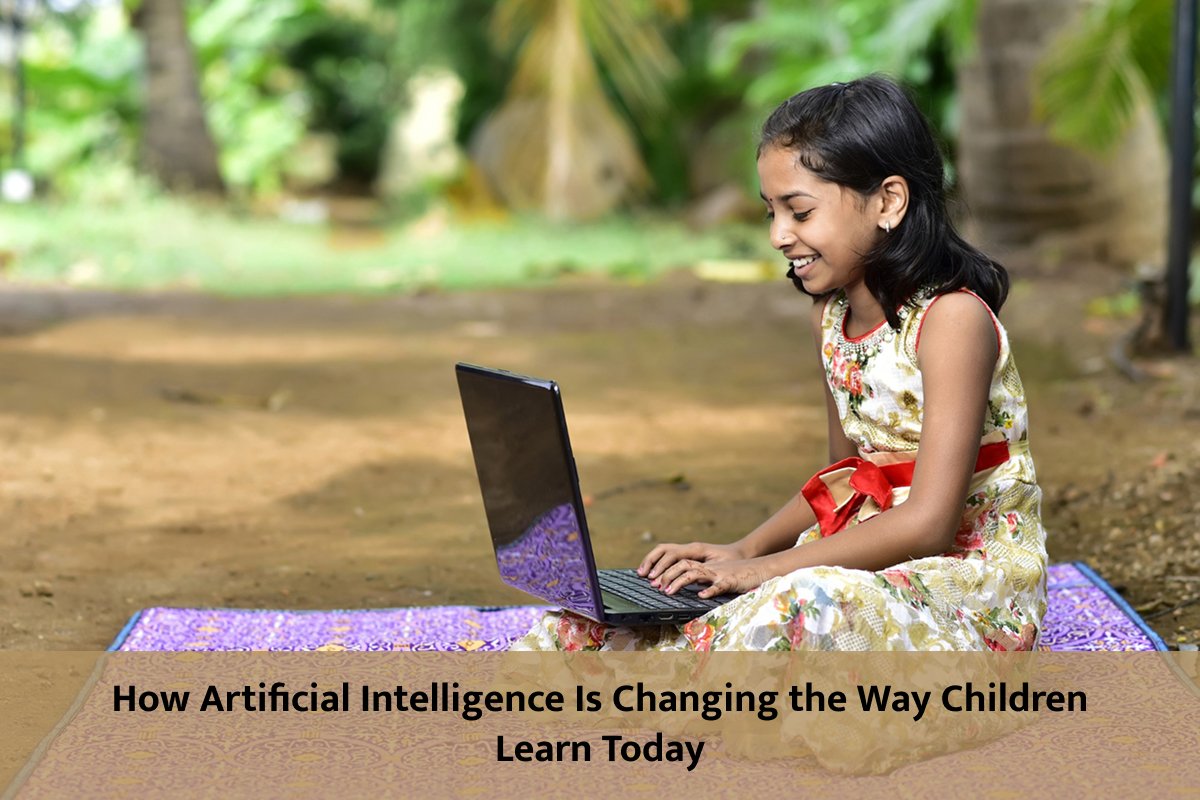
How Artificial Intelligence Is Changing the Way Children Learn Today
Current classrooms use multiple resources beyond traditional textbooks and blackboards. The educational system currently experiences a fundamental transformation because students now learn through digital platforms that offer interactive content which matches their individual learning needs.
The educational system undergoes its most significant transformation because artificial intelligence provides educational institutions with their most powerful resource for change. AI delivers personalized learning experiences to students while providing instant assessment results and advanced educational tools to both students and instructors.
What Is Artificial Intelligence in Education?
The current educational system undergoes rapid changes because technology enables students to learn in more adaptable and customized ways than any previous time. Artificial intelligence serves as the main force driving educational transformation because it develops better and more interactive educational environments.
Definition of AI in Education
Artificial Intelligence in education refers to intelligent systems which emulate human cognitive processes through their ability to learn and make decisions. The system provides machines with the power to comprehend student learning patterns so they can respond to those patterns. The result leads to personalized learning experiences which produce better educational outcomes.
How AI Works in Learning Systems
Artificial intelligence tracks student usage of educational platforms which uses that information to assess student academic development. The system establishes both student strengths and weaknesses together with their educational patterns. The system uses this information to create personalized content for students while providing them with suitable learning recommendations.
Examples of AI in Everyday Learning
Most people use AI technology without their knowledge because performance-based difficulty adjustment exists in apps that they use. Virtual tutors and auto-correct systems and recommendation systems all use AI technology. The systems deliver education in a manner which enables students to learn at a faster pace while they interact with the material.
Difference Between AI and Traditional EdTech
Traditional EdTech provides educational institutions with digital content which includes videos and online classes. AI goes a step further by adapting that content based on how you learn. The system creates distinct learning paths which enable better learning outcomes for users.
Why AI Is Becoming Essential
AI technology achieves its growing significance because students require unique learning approaches which standard teaching methods cannot provide. The system enables teachers to complete their work more efficiently while devoting additional time to actual teaching. The system delivers educational content to students through methods which enhance their learning process.
Why AI Is Transforming Children’s Learning
Children today are growing up in a world that is far more digital and fast-paced than ever before. The new learning approach has transformed student learning because students now need different methods to comprehend information and maintain their focus and develop their skills.
Shift Toward Personalized Learning
AI technology enables educational institutions to recognize individual learning differences because students demonstrate distinct learning progressions. The system creates tailored educational content which matches the individual abilities and educational needs of the student. The platform creates a relaxed learning environment which reduces academic pressure.
Need for Future-Ready Skills
Today’s children need skills like critical thinking, problem-solving, and digital literacy. AI-based tools help them practice these skills in real-time. The program prepares students for planning their future employment paths which will require them to develop new skills.
Increasing Digital Adoption
Digital learning has become widespread because people now have better access to smartphones tablets and online learning platforms. The platforms use AI technology to create intelligent systems that provide better user experiences. The system turns traditional educational methods into interactive learning experiences.
Limitations of Traditional Education
Traditional classrooms use a teaching method that does not suit all students. This educational method results in two negative outcomes because it causes some students to lose academic progress while others do not face enough academic challenges. AI helps overcome this by customizing the learning experience.
Demand for Adaptive Learning
Educational institutions require systems that can develop with student progress. AI technology enables systems to analyze user performance while updating their educational materials. The program ensures that learning materials stay relevant while maintaining effective educational outcomes.
Key Benefits of AI in Education for Kids
The implementation of AI technology in classrooms enables educational institutions to create learning environments that are better suited for children. The system provides educational institutions with a dynamic learning method which allows them to shape their teaching according to individual student progress.
Personalized Learning Experience
AI creates customized learning experiences which adapt to the individual learning speed and comprehension level of each student. The system concentrates on providing assistance to students who require additional support. The learning process becomes simpler through this method which delivers personalized educational experience.
Immediate Feedback and Assessment
Children don’t have to wait for results or corrections. The AI tools provide students with immediate feedback about their performance. Students use this method to gain knowledge through their immediate errors.
Improved Learning Speed
Every child learns at a different speed, and AI respects that. The system enables quick learners to advance while it provides assistance to students who require additional studying time. The system establishes a peaceful educational environment which accommodates all students.
Increased Engagement
AI creates enjoyable educational experiences through its interactive elements which include quizzes and games. Students demonstrate greater dedication through their improved capacity to sustain attention. The process transforms education into a delightful experience.
Accessibility for Diverse Learners
The system provides educational support to students who require special assistance and who demonstrate different learning capabilities. The system uses voice assistance and translation services together with visual aids to make content accessible to users. The system provides equal educational access to all students.
How AI Personalizes Learning for Children
The teaching process needs to create customized methods which match each student particular way of learning and their development journey. The dedicated learning method supports students while building their confidence which leads to better learning results through its two effectiveness aspects.
Adaptive Learning Systems
The system uses adaptive learning technology to create personalized learning experiences for each student. The AI system modifies content difficulty according to a child’s learning progress. The system decreases content difficulty when a student experiences challenges. The system raises test difficulty when a student reaches successful performance. The system maintains an educational method which delivers effective learning without causing stress to students.
Customized Learning Paths
The system creates personalized educational experiences which adapt to the specific requirements of each student. The system chooses educational materials, training activities, and learning speed according to the specific requirements of each student. The system guarantees that students will experience complete different learning paths.
Tracking Student Progress
The system uses AI to track the educational development of a student throughout their learning period. The system keeps a record of the tasks that were finished together with the achieved scores and the areas which need development. The system enables teachers and students to track their educational development through the use of this tool.
Identifying Strengths and Weaknesses
The system uses performance data to identify a student’s strengths as well as their areas which require assistance. The system helps in focusing efforts on improvement. It makes learning more targeted and efficient.
Real-Time Recommendations
The system uses artificial intelligence to deliver immediate recommendations which include the next study topic and study materials for review. The system creates study recommendations which depend on the user’s current performance. The system helps children stay on the right track without confusion.
AI Tools and Technologies Used in Education
AI has become an operational technology because children use multiple tools that function as AI systems in their everyday activities. The educational technologies work to simplify learning processes while delivering intelligent and engaging educational experiences.
AI-powered tools enable students to learn at their own pace through interactive learning experiences which improve their educational results.
AI-Based Learning Apps
AI-based learning apps adjust content based on a child’s performance and understanding. The program provides customized quizzes together with lessons and practice sessions. This educational method helps children learn according to their preferred learning style.
Smart Tutors and Chatbots
Smart tutors and chatbots operate as virtual teachers who students can access at any moment. The system provides answers to questions while it helps students understand concepts through step-by-step guidance. The system makes learning support accessible to students in all locations beyond school hours.
Voice Assistants for Learning
Voice assistants help children learn through simple voice commands and interactions. The system allows users to ask questions while it reads text and assists with word pronunciation. This system creates a learning environment that promotes better understanding through interactive elements.
Gamified Learning Platforms
Gamified platforms use games, rewards, and challenges to make learning fun. AI technology tracks student progress while it modifies content difficulty to match student performance. The system transforms studying into a pleasant experience that students find enjoyable.
Data Analytics in Education
Educational institutions use data analytics technology to study student learning patterns throughout their academic journey. The system tracks student performance while it discovers learning patterns and recommends educational enhancements. This approach enables teachers to develop better strategies for helping students achieve their learning goals.
Role of AI in Improving Student Engagement
The learning process becomes difficult because children have trouble staying focused when they face multiple distractions. AI creates solutions which allow children to learn through interactive educational experiences that match their natural methods of maintaining interest.
AI promotes active student involvement through its educational design which requires students to take part in learning activities. The design creates a space where students develop more interest and motivation to pursue educational activities.
Interactive Learning Experiences
AI enables students to explore educational content through hands-on learning activities which include quizzes and simulations. Children can take part in activities which require them to move beyond reading and listening. This method helps students maintain their attention while staying interested.
Gamification and Rewards
AI employs point systems and badge achievements to create student incentives. The educational experience becomes enjoyable and exciting because these elements resemble games. The system motivates children to achieve their objectives while making progress through their learning.
Personalized Content Delivery
AI presents educational content to students based on their personal interests and individual learning preferences. The system ensures that students can comprehend content which maintains their attention throughout the learning process. This training method demonstrates higher success rates because it helps students maintain their focus on learning.
Visual and Multimedia Learning
AI enables better understanding of concepts through its support for video content and animated material and graphical elements. Visual content makes learning easier and more enjoyable. It helps children understand topics faster.
Real-Time Interaction
AI tools provide users with immediate messaging capabilities through chatbots and virtual assistant technology. Students can request information and receive immediate responses. This method maintains a constant educational experience which keeps learners interested.
AI vs Traditional Learning Methods
The traditional educational system operates through fixed classroom structures which require students to study identical material at identical speeds. The method has operated successfully during many years however it does not provide effective solutions for all types of students. The introduction of artificial intelligence creates new learning paths which enable students to receive customized educational experiences.
Teaching Approach Differences
The fixed curriculum of traditional education presents identical material to every student through standardized teaching methods. AI technology provides content that matches the specific needs of each individual user. The system creates customized learning experiences which improve learning outcomes.
Learning Pace and Flexibility
Students in traditional classrooms must complete their work according to established time limits. The AI system enables students to select their learning speed based on how well they understand the material. The system enables students to learn in an environment which allows them to choose their own learning methods.
Role of Teachers
Teachers who work in traditional classrooms deliver educational content to their students. The introduction of AI technology enables teachers to dedicate time toward supporting their students while maintaining their teaching responsibilities. The system enables teachers to concentrate their efforts on enabling student learning while eliminating their need to perform standard tasks.
Student Engagement Levels
The traditional teaching methods tend to create learning experiences which students find boring. AI technology creates interactive learning experiences through its development of quizzes and games which provide students with immediate feedback. The system enables students to participate more actively during their academic sessions.
Outcomes and Effectiveness
Traditional educational methods produce successful results yet they fail to benefit all students with equal effectiveness. The AI system improves educational results by determining and solving the particular learning deficiencies of each student. The program provides students with better comprehension skills which lead to permanent knowledge retention.
Comparison Table
| Factor | AI-Based Learning | Traditional Learning |
|---|---|---|
| Personalization | High | Low |
| Feedback | Instant | Delayed |
| Engagement | Interactive | Passive |
| Flexibility | High | Limited |
| Adaptability | Dynamic | Fixed |
Impact of AI on Teachers and Classrooms
The teaching profession will not be replaced by AI technology because it transforms teaching methods while enhancing teacher effectiveness. The system enables teachers to concentrate on their teaching responsibilities and student assistance work because it performs repetitive functions while delivering valuable information.
Supporting Teachers with Data Insights
AI technology gathers and processes student achievement data during ongoing assessments. The system identifies students who require assistance and those who demonstrate high performance. The information enables teachers to enhance their decision-making abilities through better knowledge.
Reducing Administrative Work
The AI system can handle grading tasks and attendance monitoring and report generation processes. The system enables teachers to save substantial time. Their teaching time increases because they spend less time on administrative responsibilities.
Enhancing Teaching Methods
AI delivers interactive teaching solutions which enable educators to develop customized learning experiences for their students. Teachers can use these tools to make lessons more engaging. The system helps boost educational quality through its various teaching resources.
Role Shift from Instructor to Facilitator
Teachers can now use AI systems to automate their basic teaching tasks because these systems provide them with essential knowledge. The educational approach leads students to develop a complete understanding of subjects. The approach helps students develop a deep understanding of their educational materials.
Improving Classroom Efficiency
AI technology assists teachers with lesson organization and progress tracking and classroom management. The system cuts down on uncertainty which leads to more efficient classroom operations. The system creates an environment which enables the class to work efficiently and produce high results.
Skills Children Develop Through AI-Based Learning
AI-based learning enables students to acquire essential skills which serve their entire lifespan. Students develop skills through their interactions with smart tools and adaptive platforms which exceed what they learn from their educational materials.
Critical Thinking and Problem-Solving
AI tools require children to think beyond initial impressions and develop their own solutions through independent thinking. The tasks demand users to solve problems through their ability to think critically and make choices. The process develops effective techniques which help to solve challenges.
Digital Literacy
Children become comfortable using technology through regular interaction with AI tools. The program teaches children how to navigate platforms and utilize digital resources while teaching them to understand online tools. The program develops digital skills which students need for their future.
Creativity and Innovation
AI platforms often provide children with activities which include both interactive elements and open-ended possibilities. The activities provide children with a creative space to develop and explore their artistic concepts. The program encourages them to develop solutions which contain both original and different elements.
Adaptability and Flexibility
AI-based learning systems maintain their capacity to adjust to fresh material and evolving situations. Students acquire skills to tackle various types of educational materials and different learning obstacles. The process enables them to develop more adaptable methods for their educational journey.
Independent Learning Skills
AI systems enable children to learn independently without needing adult help because they provide guidance for self-directed work. The children begin to take charge of their own learning advancement. The process develops students’ self-assurance while they develop abilities to learn independently.
Challenges and Concerns of AI in Education
AI provides educational institutions with multiple advantages yet brings forth various obstacles which educational institutions must address. The technology requires responsible usage because it can either help or obstruct the educational process.
Overdependence on Technology
Children need advanced thinking skills however their excessive use of AI tools prevents them from developing this ability. The students will search for fast answers through the system instead of working through the problems themselves. The people in this study will experience two negative effects which include a decline in their capacity to think critically and their ability to develop solid reasoning abilities.
Data Privacy and Security
The AI systems require large amounts of student information to create customized learning experiences which raises important privacy concerns. Improper data protection measures lead to two main risks which include data misuse and data exposure. Schools and platforms must implement strict measures to ensure complete protection of student information throughout all times.
Reduced Human Interaction
Learning requires students to acquire knowledge through studying materials while simultaneously developing their abilities to interact with others. Excessive usage of AI technology will decrease students’ opportunities to interact with both their instructors and their classmates. Students’ emotional and social development will be affected by this situation.
Accessibility Gaps
There exists a digital divide because certain students lack access to essential educational technology and internet facilities. The situation creates an educational gap because some students can access AI educational tools while others remain unable to do so. The situation creates an educational gap because some students can access AI educational tools while others remain unable to do so.
Screen Time Concerns
Students who use AI-based educational programs spend extended periods working on screen activities. Health problems arise from excessive screen time which includes damage to eyes and loss of attention capacity. Students need to learn how to control their screen time because it plays a vital role in developing their educational growth.
Role of Parents in AI-Driven Learning
Parents assume their essential responsibilities when they control AI technology which has become part of their children’s learning process. Educational technology needs proper balance together with monitoring because these factors determine its success in helping children learn.
Active parental participation together with their knowledge-based decision making and their support for both digital and physical educational activities create the necessary equilibrium.
Monitoring Screen Time
Parents need to keep an eye on how much time children spend on screens. Excessive screen time leads to negative health effects which result in decreased ability to concentrate. Setting limits helps maintain a healthy routine.
Choosing the Right Tools
Not all AI-based educational tools provide equal value because some tools lack essential safety features. Parents need to identify educational platforms which match their children’s age requirements and learning needs. This ensures children get the right kind of learning support.
Encouraging Balanced Learning
Learning should extend beyond screen-based activities. Parents should encourage their children to participate in activities which include reading and playing together with creative tasks. This helps in overall development.
Supporting Emotional Development
Human beings need social interaction together with motivational support and emotional understanding. Parents help their children develop self-esteem while they establish emotional health. AI cannot replace this support.
Staying Informed About Technology
Parents need to keep up with technology because it keeps changing. AI tool operation knowledge enables parents to more effectively guide their children. The system establishes rules which enhance security and improve technology operation.
Future of AI in Children’s Education
The upcoming years will bring increasing educational importance to artificial intelligence technology. The developing technology will create new educational methods which provide students with more flexible and inclusive learning experiences that match their real world requirements.
Personalized Learning at Scale
The implementation of AI technology will enable educational institutions to provide customized learning experiences to large groups of students simultaneously.Each student will receive educational materials which match their individual development speed and learning strengths. The approach ensures students acquire knowledge better which results in higher educational achievement.
Integration with Virtual Reality
Virtual reality technology combined with artificial intelligence will provide students with complete authentic learning experiences.Students will have the ability to experience learning through interactive simulations and virtual learning spaces. The method creates a more interactive educational experience which makes it simpler for students to learn.
Data-Driven Education Systems
Educational institutions will base their teaching improvements and student success enhancements on data analysis. AI will examine educational patterns to deliver insights which help organizations make better choices. The system will provide educational institutions with better operational procedures which enable them to achieve specific learning objectives.
Lifelong Learning Models
Education will continue to exist as an ongoing process throughout a person’s entire life. Artificial intelligence will enable people to acquire knowledge continuously throughout their entire lives. The process will create adults who maintain their professional qualifications through continuous skill updates.
Preparing for Future Careers
Artificial intelligence will assist children in acquiring essential competencies needed for upcoming employment opportunities. The program will instruct students in three main skills that include technology competencies and creative abilities and problem solving techniques. The educational program prepares students for professions which will undergo continuous transformation.
FAQs About AI in Education for Kids
As educational institutions increase their use of AI technology both students and their parents need to understand how this technology functions and its actual value. Basic knowledge helps users operate AI systems through secure methods which provide effective results.
Q1. What is AI in education?
AI in education refers to smart technology that helps improve learning by adapting to each student’s needs. The system provides personalized lessons together with immediate assessments and enhanced learning resources
Q2. How does AI help children learn better?
AI helps students by creating custom content which matches their individual learning patterns and assessment results. The system evaluates abilities together with assessment performance to deliver suitable content difficulties. This process creates a learning experience which improves both effectiveness and student engagement.
Q3. Is AI safe for kids?
AI systems become secure when users access them through trustworthy platforms which implement effective privacy protocols. Schools together with parents need to establish proper measures for safeguarding student information. The process needs both active supervision together with expert guidance.
Q4. Can AI replace teachers?
AI systems cannot fully replace teachers. The system assists teachers by automating their everyday responsibilities while it offers them valuable information about their work. Teachers provide essential support because they help students through learning processes while giving them continuous encouragement and emotional assistance.
Q5. What are the risks of AI in education?
The two main hazards include students who become too dependent on technology together with students who use educational AI systems. Implementing responsible AI usage together with controlling screen time will assist in decreasing these threats.
Key Takeaways
The educational system undergoes transformation through AI because it creates new learning methods which improve student engagement and provide customized learning experiences for each student. The system provides numerous benefits but its actual effects depend on the successful combination of automated systems with human instructors and real-life learning situations.
AI enables parents and teachers and educational institutions to establish better learning environments which support student development when they recognize both advantages and difficulties of this technology.
AI transforms the educational process for children
The use of personalized learning programs leads to better academic results
Educational systems need to maintain an equal distribution of technological resources and personal contact with human instructors
Educational institutions and their parent associations operate as vital partners in student development efforts.
Preparing Children for an AI-Driven Future
As AI continues to shape the world around us, it’s important to prepare children not just to use technology but to understand technology and develop with it. The future will demand more than basic knowledge because people will need to develop adaptability skills and maintain their curiosity and work on their independent thinking abilities.
Parents and educators can support this by encouraging skill-based learning together with creativity development and problem-solving instruction. The combination of technology with practical experiences enables children to build their self-assurance and develop the necessary attitude for success in an AI-enabled world.

Leave a Reply