


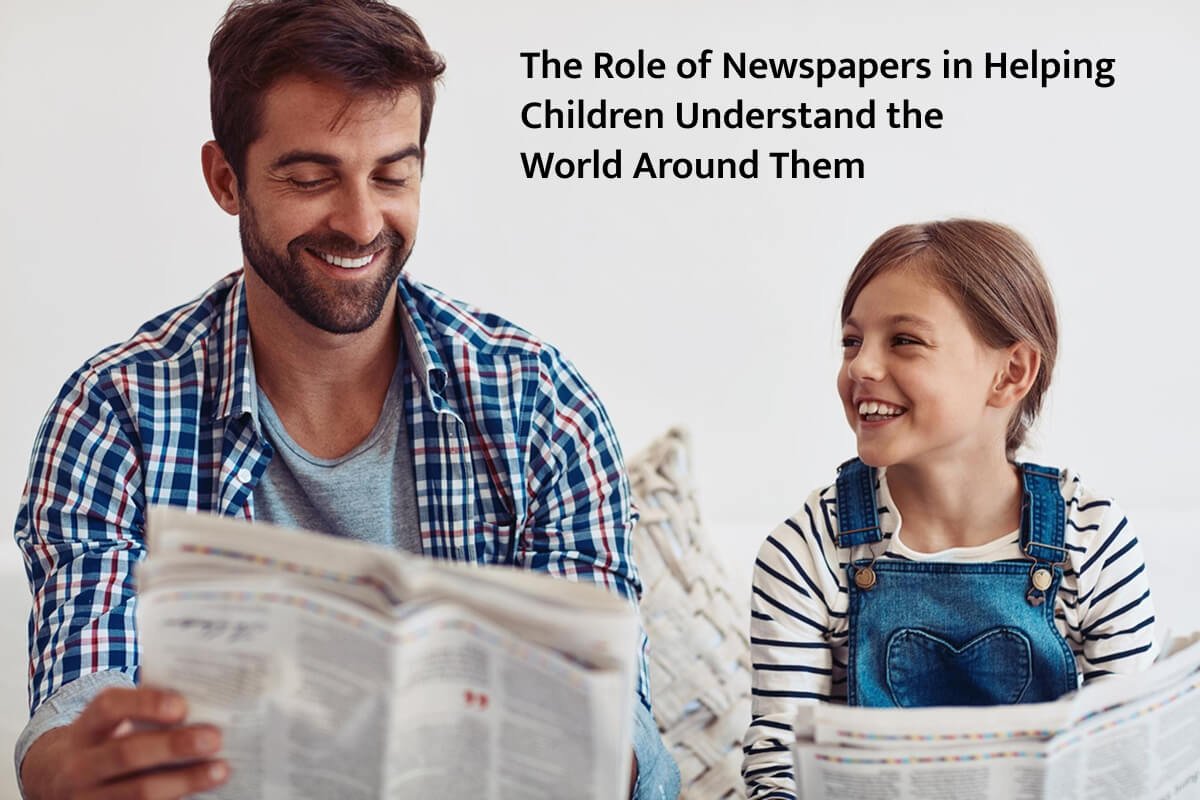
The Role of Newspapers in Helping Children Understand the World Around Them
Why Understanding the World Matters in Childhood
Childhood is often viewed as a time to focus inward—on school, play, routines, and personal growth. Yet children are not isolated from the world around them. They are constantly absorbing information, forming opinions, and trying to make sense of events they hear about from adults, screens, and peers. In a world overflowing with information, helping children understand what is happening and why it matters has become an essential part of education.
Newspapers, often considered old-fashioned in the digital age, offer a powerful and structured way to introduce children to the real world. When guided thoughtfully, they help build awareness, critical thinking, empathy, and media literacy—skills that are increasingly vital in modern society.
Children do not grow into aware, responsible adults overnight. Their understanding of the world develops gradually, shaped by what they see, hear, and discuss during their early years.
Early awareness helps children form perspective. When children understand that their lives exist within a larger social, cultural, and global context, they begin to see beyond themselves. This perspective builds confidence—not arrogance, but grounded self-assurance rooted in understanding. Children who are aware of the world feel more prepared to engage with it rather than overwhelmed by it.
Understanding the world also nurtures social responsibility. Children learn that actions have consequences, that people experience life differently, and that communities function through shared effort. These realizations shape empathy, ethical thinking, and a sense of belonging. Introducing children to the world early—through age-appropriate, guided exposure—lays the foundation for thoughtful citizenship and lifelong curiosity.
Why Newspapers Still Matter in a Digital Age
In an era dominated by social media feeds, short videos, and algorithm-driven content, newspapers may seem outdated. Yet their relevance has not diminished—in fact, it has become more significant.
Newspapers offer credibility. They are curated, edited, and accountable, unlike much of the unverified content circulating online. For children, this reliability matters. It teaches them that not all information is equal and that trustworthy sources exist.
They also provide depth. Unlike fragmented digital snippets, newspapers present complete stories with background, analysis, and continuity. This structure helps children understand events as part of a larger narrative rather than isolated incidents.
Most importantly, newspapers encourage focused reading. In contrast to the constant distractions of digital media, newspapers allow children to engage with information thoughtfully, fostering concentration, comprehension, and reflection.
Newspapers as Windows to the Real World
For children, the world beyond home and school can feel abstract. Newspapers act as windows, offering glimpses into real lives, real places, and real events.
Through news stories, children encounter people from different cultures, professions, and circumstances. They read about communities facing challenges, individuals making change, and societies responding to events. These stories humanize the world, helping children understand that global issues affect real people—not just statistics.
This connection builds awareness and empathy. Children begin to recognize similarities and differences between their own lives and those of others. Newspapers transform distant events into relatable experiences, making the world feel accessible rather than overwhelming.
From Headlines to Context and Meaning
Headlines are designed to capture attention, but true understanding lies beneath them. Teaching children to move beyond surface reading is a crucial skill.
When children explore the background of a story—what led to it, who is involved, and why it matters—they learn to think critically. Context helps them see patterns, causes, and implications rather than reacting emotionally or superficially.
Understanding meaning also involves discussing consequences. What might happen next? Who is affected? How does this connect to broader issues? These questions deepen comprehension and encourage reflective thinking, turning news reading into an active learning process.
Building Awareness Beyond the Classroom
Classrooms provide structured knowledge, but the world extends far beyond textbooks. Newspapers bridge this gap by exposing children to real-world issues.
Social issues such as inequality, health, and education help children understand societal challenges.
Environmental concerns introduce responsibility toward the planet and future generations.
Community events foster a sense of local belonging and participation.
Global happenings broaden horizons, helping children understand interconnectedness.
This awareness enriches classroom learning by giving it relevance. Subjects like history, geography, and science come alive when connected to current events, making education more meaningful and engaging.
Developing Critical Thinking Through News
News is not just information; it is interpretation. Learning to read news critically helps children develop reasoning skills essential for lifelong learning.
Children learn to analyze stories by asking questions: Who is telling this story? What evidence is presented? Are there multiple viewpoints? This process builds logical thinking and discernment.
Exposure to different perspectives helps children understand that issues are complex. Rather than accepting information passively, they learn to evaluate and reflect. This habit of mind prepares them to navigate a world filled with competing narratives and opinions.
Learning Cause, Effect, and Consequences
One of the most powerful lessons news teaches is the relationship between actions and outcomes. News stories often show how decisions—by individuals, governments, or communities—lead to consequences.
Children begin to understand cause and effect: how policies impact people, how environmental actions affect ecosystems, and how social behaviors shape communities. These lessons help children grasp responsibility and accountability.
By seeing real-world consequences unfold, children learn that choices matter. This understanding supports ethical thinking and informed decision-making.
Emotional Awareness and Empathy Through Stories
Behind every news story are human emotions—joy, loss, struggle, hope. When children engage with these stories thoughtfully, they develop emotional awareness.
Reading about challenges faced by others fosters empathy. Children learn to imagine different experiences and perspectives. This emotional connection builds compassion and sensitivity.
Discussing emotions openly helps children process what they read. They learn to recognize feelings in others and themselves, strengthening emotional intelligence—a skill as important as academic knowledge.
Understanding Society, Governance, and Community
Newspapers introduce children to how societies function. They learn about governance, public institutions, and community roles in a practical, accessible way.
Children begin to understand civic concepts such as leadership, laws, public services, and citizen responsibilities. These ideas, when grounded in real events, feel relevant rather than abstract.
This early civic awareness lays the foundation for informed participation later in life. Children who understand how systems work are more likely to engage responsibly and thoughtfully as adults.
News as a Tool for Media Literacy
In today’s information-rich world, media literacy is essential. Newspapers provide an excellent starting point for teaching these skills.
Children learn to distinguish facts from opinions, recognizing the difference between reporting and commentary.
They become aware of bias, understanding that perspectives can shape narratives.
They practice evaluating sources, learning to trust credible information.
These skills empower children to navigate digital media responsibly, reducing vulnerability to misinformation and manipulation.
Encouraging Curiosity and Questioning
News naturally sparks curiosity. Stories raise questions about causes, solutions, and future developments.
Encouraging children to ask “why,” “how,” and “what next?” turns news reading into inquiry-based learning. Curiosity fuels deeper understanding and keeps learning dynamic.
When adults welcome questions rather than rush to answers, children learn that curiosity is valuable. This mindset supports lifelong learning and adaptability.
Age-Appropriate News and Guided Reading
Not all news is suitable for all ages. Guided, age-appropriate exposure ensures learning remains positive and constructive.
Simplified explanations help children grasp complex issues without confusion.
Contextual discussion provides background and meaning.
Emotional reassurance helps children process difficult topics safely.
Guidance ensures that news becomes a tool for understanding rather than fear.
Role of Parents in Newspaper-Based Learning
Parents play a central role in shaping how children engage with news.
Reading together creates shared learning experiences and strengthens bonds.
Discussing stories helps children interpret information and express thoughts.
Encouraging questions fosters curiosity and critical thinking.
Parental involvement ensures that news reading remains supportive, reflective, and meaningful.
Role of Schools in Using Newspapers as Resources
Schools can integrate newspapers effectively into learning environments.
By linking news to curriculum, teachers make lessons relevant.
Facilitating discussion encourages dialogue and perspective-sharing.
Teaching interpretation helps students analyze information critically.
When schools use newspapers thoughtfully, they prepare students for informed engagement with the world.
Balancing Information with Emotional Safety
While awareness is important, emotional safety must remain a priority. Children need support when engaging with challenging news.
Adults should filter content, frame discussions carefully, and validate emotions. Providing reassurance and context helps children feel secure while learning about the world.
Balanced exposure builds resilience rather than anxiety.
FAQs About Children and Newspapers
Parents and educators often have questions about introducing newspapers to children. Understanding these concerns helps ensure healthy engagement.
Q1. Are newspapers suitable for children?
Yes, when content is age-appropriate and guided. Newspapers can be powerful learning tools when adults provide context and support.
Q2. At what age can children start reading newspapers?
Children can be introduced gradually in early childhood through simplified articles, visuals, and discussions. The approach should evolve with age and maturity.
Q3. How do newspapers help build thinking skills?
They develop comprehension, critical thinking, reasoning, and perspective-taking. Newspapers encourage analysis rather than passive consumption.
Q4. Can news exposure cause anxiety in children?
Unfiltered exposure can, but guided reading reduces this risk. Emotional support and reassurance are key to healthy engagement.
Q5. How can adults guide healthy news reading habits?
By reading together, discussing openly, limiting exposure when needed, and encouraging questions. The goal is understanding, not overload.
Key Takeaways
Newspapers help children understand the real world beyond classrooms. Guided reading builds awareness and critical thinking. News connects academic learning to life experiences. Early media literacy creates informed, thoughtful individuals.
When introduced thoughtfully, newspapers become more than sources of information—they become tools for raising curious, empathetic, and socially aware minds ready to engage with the world with confidence and care.

Leave a Reply