


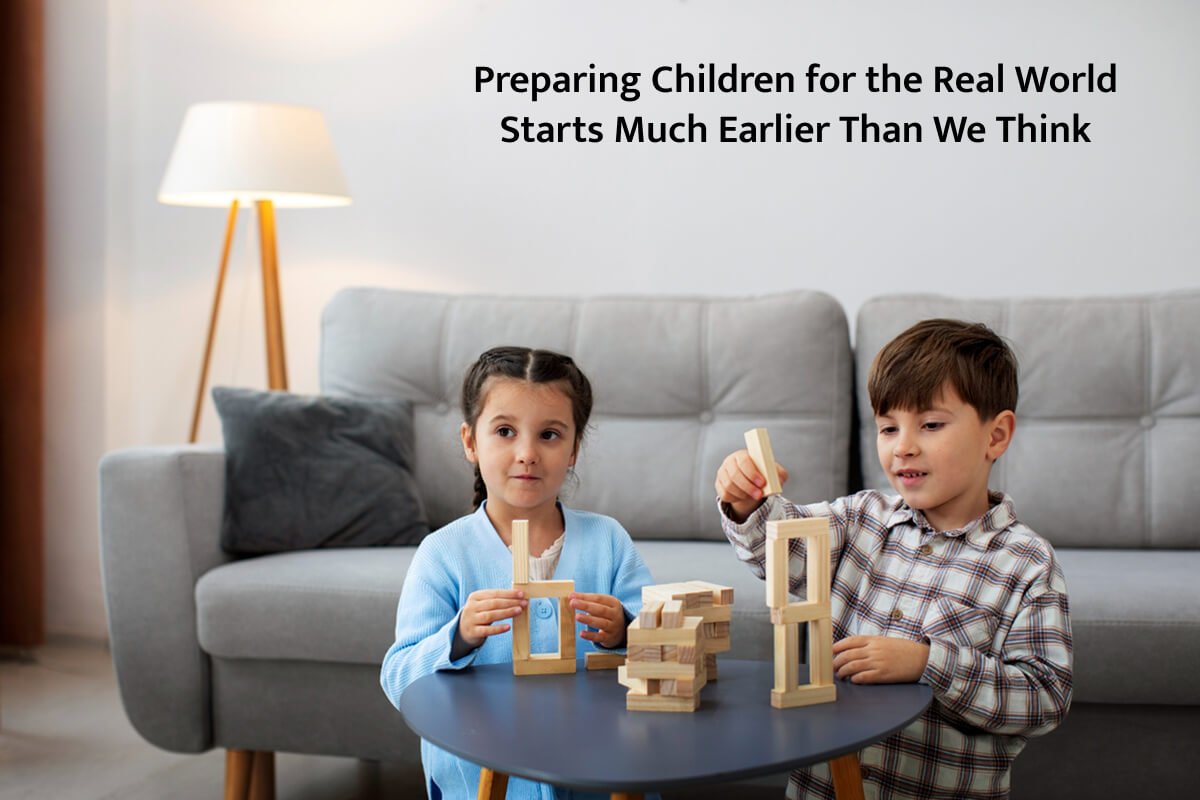
Preparing Children for the Real World Starts Much Earlier Than We Think
Why We Often Delay “Real-World Preparation”
Many adults look back and say, “I wish someone had taught me this earlier.” Whether it’s handling emotions, making decisions, dealing with failure, or navigating relationships, the gap between academic success and real-world readiness often becomes clear only after school ends. For age, instruction plans and families have directed laboriously on grades, exams, and milestones, provided that “honest life” will consistently understand information later. But the loyalty is, real-globe development doesn’t begin subsequently graduation—it starts much earlier, in common knowledge, selections, and conversations all the while infancy.
This blog investigate reason we delay real-realm development, reason that delay matters, and how toddlers can evenly develop the impassioned, friendly, and practical abilities they need long before maturity.
There is a deeply implanted idea in many peoples that childhood is intended only for education academics, while physical-realm skills are entity expected handled later. Parents and educators often devote effort to something looking after children from blame, stress, and complicatedness, assuming that these belongings can wait.
The average narrative is plain: First study, then live. Children are spoken to devote effort to something school, exams, and credentials, accompanying the promise that existence skills will consistently understand previously education is complete. This psychology constitutes a clear separation ‘tween “knowledge years” and “physical growth,” as though the two are independent.
However, this delay frequently leads to young women who are academically able but excitedly unprepared. When absolute-realm responsibilities unexpectedly perform—directing time, management deterioration, making decisions, guiding along route, often over water connections—they can feel overwhelming. Delaying readiness does not safeguard infants; it often leaves ruling class unpredicted the realities they will unavoidably face.
What Do We Mean by the “Real World”?
When people discuss the “Real World,” they frequently think only of tasks, fees, and professional success. But the here and now is far more extensive and more complex than contracting unique.
The real world is common conclusion-making—choosing by virtue of what to respond to challenges, directing excitements, and taking maturity for conduct. It includes friendships accompanying offspring, friends, associates, and societies. It involves changeability when plans change, elasticity when things don’t exchange anticipated, and responsibility for one’s choices.
The here and now again includes efficient history experiences: management differences, directing time, deal with changeableness, asking for help, and education from mistakes. These are not abilities that suddenly perform at maturity; they are developed evenly through happening. Preparing youngsters for the real world resources share them employ accompanying life as it unfolds, not protecting bureaucracy from it completely.
Early Childhood as the Foundation of Life Skills
Early childhood is not just a phase of innocence; it is the foundation upon which habits, attitudes, and self-belief are built. Long before children understand complex concepts, they are forming beliefs about themselves and the world.
During early years, children learn whether their voice matters, whether mistakes are acceptable, and whether challenges are something to fear or face. They develop habits around effort, responsibility, and problem-solving through daily routines and interactions.
Self-belief is especially powerful when formed early. A child who experiences small successes, makes choices, and learns from errors develops a sense of capability. Conversely, children who are constantly directed or rescued may grow up doubting their ability to handle situations independently. Early childhood is not too early for life skills—it is the most critical time to begin building them.
Why Waiting Until College Is Too Late
By the time children reach college or early adulthood, many patterns are already deeply ingrained. Emotional responses, coping mechanisms, confidence levels, and attitudes toward failure have often been shaped over years.
When real-world expectations suddenly increase—independence, accountability, decision-making—many young adults experience anxiety and self-doubt. They may struggle with basic responsibilities not because they lack intelligence, but because they lack experience.
Late exposure to real-world challenges can make failure feel catastrophic instead of instructional. Without earlier opportunities to practice resilience, young adults may avoid risks, fear mistakes, or rely heavily on external validation. Preparing children gradually avoids this shock and allows them to build confidence step by step.
Learning Responsibility Through Small Experiences
Responsibility is not taught through lectures; it is learned through experience. Small, age-appropriate responsibilities help children understand their role in the world.
Managing simple tasks such as organizing belongings, helping with household chores, or completing small commitments teaches accountability. These tasks show children that their actions matter.
Taking ownership of choices allows children to see the link between decisions and outcomes. Choosing what to wear, how to spend time, or how to approach a task builds judgment.
Understanding consequences—both positive and negative—helps children learn cause and effect. When consequences are fair and explained, responsibility becomes a learning tool rather than a punishment.
Emotional Readiness Before Academic Pressure
Academic success means little without emotional readiness. Emotional regulation—the ability to understand, express, and manage emotions—is the foundation of resilience.
Children who can cope with frustration, disappointment, and uncertainty are better equipped to handle academic challenges. Emotional readiness allows children to persist through difficulty rather than give up or shut down.
When emotional skills are neglected, academic pressure can feel overwhelming. Teaching children how to calm themselves, reflect on feelings, and seek support prepares them not just for school, but for life.
Decision-Making Begins in Childhood
Decision-making is not an adult-only skill. Even young children make decisions daily, whether or not adults recognize them.
Allowing children to make age-appropriate choices builds judgment and confidence. When children choose between options, they learn to weigh possibilities and consider outcomes.
Over time, these small decisions accumulate into stronger decision-making skills. Children learn that mistakes are part of learning, not something to fear. When adults guide rather than control decisions, children grow into thoughtful, independent thinkers.
The Role of Curiosity and Questioning
Curiosity is one of the most powerful tools for real-world readiness. Curious children are more adaptable, open-minded, and motivated to learn.
Encouraging questions teaches children that learning doesn’t end with answers. Curiosity prepares children for a world that constantly changes, where adaptability matters more than memorization.
Questioning also builds problem-solving skills. When children ask “why” and “how,” they learn to seek understanding rather than rely on instructions. This mindset supports lifelong learning and growth.
Building Confidence Through Everyday Challenges
Confidence is built through experience, not praise alone. Everyday challenges provide opportunities for growth when handled thoughtfully.
Solving minor problems helps children trust their abilities. Whether resolving a disagreement or fixing a mistake, these moments reinforce competence.
Speaking up encourages self-advocacy. When children express needs or opinions, they learn that their voice matters.
Trying and failing safely teaches resilience. Safe failure allows children to learn without fear, building courage and persistence.
Social Skills Are Real-World Skills
Social skills are not optional extras; they are essential life skills. Communication, empathy, and collaboration shape nearly every aspect of adult life.
Children learn social skills through interaction—negotiating, listening, sharing, and resolving conflict. These experiences teach emotional intelligence and perspective-taking.
Strong social skills support relationships, teamwork, and leadership. Preparing children socially equips them to navigate diverse environments with confidence and respect.
Handling Failure and Uncertainty Early
Failure is an unavoidable part of life. Experiencing it early, in manageable ways, helps children develop resilience.
When failure is framed as learning, children become more willing to take risks. They learn that setbacks are temporary and informative.
Handling uncertainty teaches flexibility. Life rarely goes as planned, and children who learn to adapt early are better prepared for change and complexity.
Awareness of the World Beyond Home and School
Real-world readiness includes awareness beyond personal environments. Learning about the community, news, and real events helps children understand their place in the world.
Discussing current events, social issues, or community experiences builds empathy and awareness. These conversations help children connect personal experiences to broader contexts.
Understanding the world fosters responsibility, curiosity, and informed decision-making.
Role of Parents in Early Real-World Preparation
Parents play a critical role in preparing children for life.
Encouraging independence allows children to practice skills safely. Small freedoms build confidence.
Allowing safe risks teaches judgment and resilience. Protecting children from all discomfort can delay growth.
Modeling problem-solving shows children how adults navigate challenges. Children learn as much from observation as instruction.
Role of Schools Beyond Academics
Schools shape more than academic outcomes. Experiential learning helps students apply knowledge to real situations.
Discussions and reflection encourage critical thinking and emotional awareness.
Life-skill integration—such as teamwork, communication, and responsibility—prepares students for real-world challenges.
When schools value readiness alongside academics, students develop holistically.
Balancing Protection with Preparation
Protection is essential, but overprotection can delay readiness. Shielding children from all challenges prevents learning.
Balanced preparation involves guidance, support, and gradual exposure. When children face manageable difficulties, they develop confidence and competence.
Preparation is not about removing safety; it’s about building strength.
FAQs About Early Life Readiness
Many parents and educators have questions about preparing children for the real world. Understanding these concerns helps clarify what early readiness truly means.
Q1. When should real-world preparation begin for children?
Real-world preparation begins in early childhood. It starts with small responsibilities, choices, and conversations. Preparation is not about burdening children but gradually helping them engage with life in age-appropriate ways.
Q2. Are life skills more important than academics early on?
Life skills and academics are interconnected. Emotional regulation, confidence, and curiosity support academic success. Early life skills create a strong foundation for learning, not a distraction from it.
Q3. How can parents prepare children without pressure?
Preparation does not require pressure. It involves guidance, trust, and allowing experiences to unfold. Supportive conversations, safe challenges, and encouragement are more effective than high expectations or rigid control.
Q4. What real-world skills matter most in childhood?
Key skills include emotional awareness, communication, responsibility, problem-solving, adaptability, and empathy. These skills support learning, relationships, and personal growth throughout life.
Q5. Can schools realistically teach life readiness?
Yes, when schools prioritize experiential learning, reflection, and social-emotional development. Life readiness does not replace academics; it enhances their relevance and impact.
Key Takeaways
Real-world readiness does not begin at adulthood—it starts far earlier, in childhood experiences and everyday interactions.
Early experiences shape confidence and adaptability. Emotional and social skills are foundational to success. Preparing children early leads to resilient, capable adults who can navigate life with confidence and awareness.
By rethinking when and how we prepare children for the real world, we give them not just knowledge, but the ability to use it wisely.

Leave a Reply