


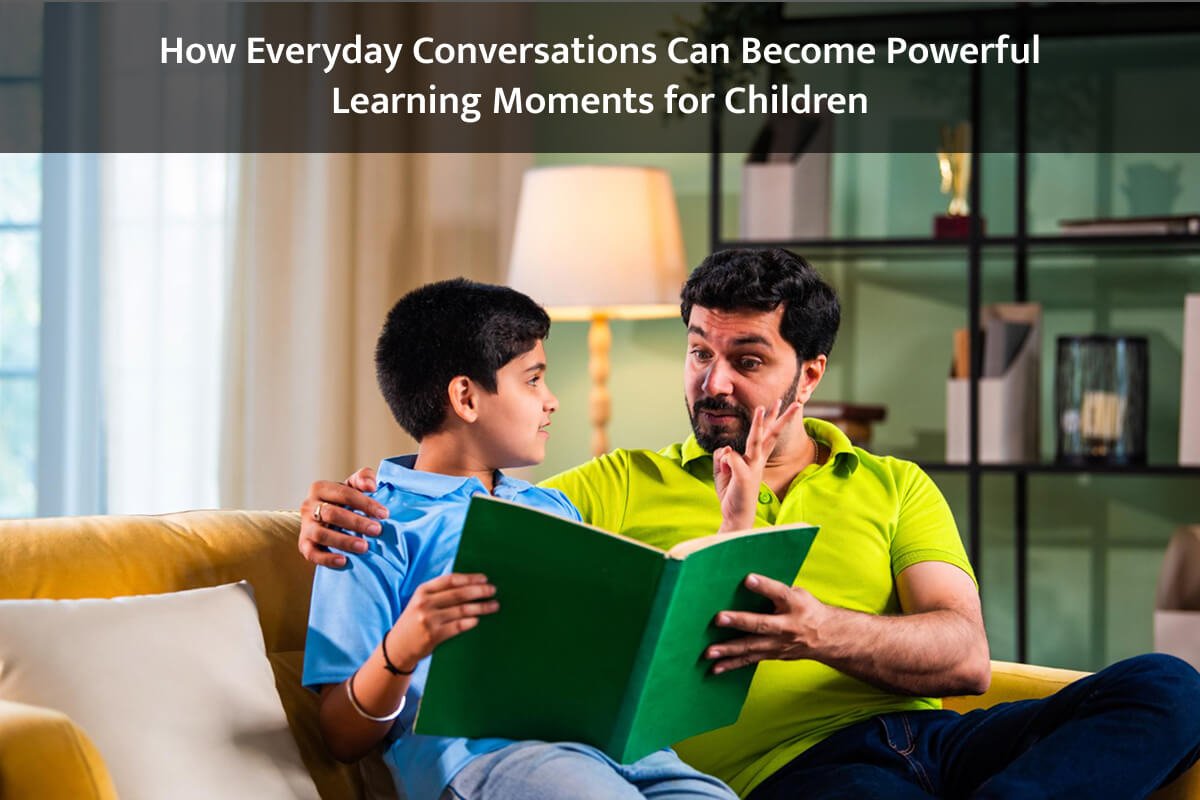
How Everyday Conversations Can Become Powerful Learning Moments for Children
Why Learning Doesn’t Begin and End in Classrooms
Learning is often imagined as something that happens inside classrooms, guided by textbooks, exams, and structured lessons. Yet few of ultimate powerful education happenings happen certainly from blackboards and report cards—all the while dialogues at the dinner table, in motor rides, all the while walks, or while discussing common occurrences. These importance, often missed, silently shape how minors contemplate, feel, reason, and believe the world. This online journal survey how discourses combine of ultimate meaningful finishes for lasting learning.
Learning is not an occurrence enclosed to a schedule; it is a continuous process spun into regularly life. While schools play an main function in providing construction, knowledge, and academic organizations, they show only one constituent a much best learning environment.
Children determine steadily through interactions accompanying population, environments, and happenings. Every question they request, all story they find out, all discussion they take part in provides to their understanding of the globe. When a child listens to persons talk, negotiates accompanying peers, reflects on a mistake, or illustrates an plan, knowledge is actively happen. These simple moments admit youth to combine ideas to certain existence, something that correct communication frequently struggle to do.
Classrooms concede possibility present concepts, but dialogues help offsprings process, embody, and internalize ruling class. Learning longers beyond worksheets into importance of interest, disorientation, disagreement, and thought. When women recognize that knowledge occurs ubiquitous, they begin to advantage dialogues as powerful instructional knowledge alternatively distractions from “absolute” education.
The Power of Conversation in a Child’s Development
At the heart of human learning lies discourse. Long before youth can state or write, they determine by hearing, responding, and charming in talk. Conversations are not just exchanges of conversation; they are exchanges of ideas, passion, and outlooks.
Through conversation, offsprings determine by means of what to think, not just what to anticipate. Talking helps bureaucracy organize concepts, explain disorientation, and explore potential. When a youth explains entity loudly, they are energetically making meaning. When they attend another outlook, they learn elasticity and understanding. Conversations admit children to degrade happenings, link past knowledge accompanying new news, and develop interpretation abilities.
More basically, conversation gives youth a sense of being perceived and valued. When persons join honestly, children feel their plans matter. This confirmation strengthens confidence, helps verbalization, and builds a endowment for lifelong knowledge and ideas.
What Makes a Conversation a Learning Moment
Not every conversation automatically leads to learning. Certain qualities transform ordinary talk into meaningful learning experiences. These elements create an environment where thinking can flourish.
Openness and curiosity are essential. When adults approach conversations with genuine interest rather than predetermined answers, children feel free to explore ideas. Curiosity invites questions, speculation, and deeper thinking rather than simple right-or-wrong responses.
Mutual respect ensures that children’s thoughts are taken seriously. When adults listen without interrupting or dismissing ideas, children learn that thinking is valued. Respectful dialogue teaches them how to listen to others and respond thoughtfully.
Space to think aloud allows children to process ideas verbally. Thinking aloud often involves pauses, uncertainty, and revisions. When adults resist the urge to correct immediately, children learn to reason through complexity, develop clarity, and build confidence in their own thinking.
Together, these elements turn conversation into a dynamic learning space rather than a one-sided exchange.
Listening Before Teaching
Listening is one of the most powerful yet underrated teaching tools. Before adults instruct, correct, or guide, listening allows them to understand a child’s perspective, misconceptions, emotions, and thought processes.
When children feel listened to, trust develops. This trust encourages deeper engagement, honesty, and curiosity. A child who feels safe sharing incomplete or incorrect ideas is more likely to explore and learn. Listening also signals respect, showing children that learning is a shared journey rather than a top-down process.
By listening first, adults can respond more thoughtfully. Instead of delivering generic explanations, they can build on what the child already knows, address specific gaps, and guide thinking gently. Listening transforms teaching from instruction into collaboration.
Encouraging Curiosity Through Dialogue
Curiosity is the engine of learning, and dialogue is one of its strongest fuels. Instead of giving immediate answers, adults can nurture curiosity by asking thoughtful questions that invite reflection.
Questions like “Why do you think that happened?”, “How do you think it works?”, and “What do you think would happen if…?” encourage children to explore ideas rather than memorize facts. These questions shift the focus from correctness to exploration.
When adults model curiosity themselves—wondering aloud, admitting uncertainty, and exploring possibilities—children learn that learning is ongoing. Dialogue becomes a shared discovery process rather than a test of knowledge. Over time, this approach helps children develop intrinsic motivation, problem-solving skills, and intellectual confidence.
Everyday Topics That Spark Deep Thinking
Deep thinking does not require complex academic material. Everyday topics provide rich opportunities for learning when explored through conversation.
Family discussions about routines, decisions, or challenges teach children reasoning, negotiation, and values. Discussing why certain rules exist or how decisions are made helps children understand consequences and responsibility.
School experiences offer natural reflection opportunities. Talking about what went well, what was challenging, or how a problem was solved helps children process learning and emotions.
News and current events, when discussed age-appropriately, encourage awareness, empathy, and critical thinking. These conversations help children connect learning to the real world.
Observations from daily life—such as noticing patterns in nature, social interactions, or everyday problems—invite curiosity and analysis. Simple moments often lead to profound insights when explored thoughtfully.
Building Language, Confidence, and Expression
Conversation plays a central role in language development. When children speak freely, they experiment with vocabulary, sentence structure, and expression. Over time, this strengthens articulation and communication skills.
More importantly, regular conversation builds confidence. When children feel safe expressing ideas without fear of ridicule, they develop self-belief. They learn that their voice matters and that ideas can evolve through discussion.
Expressing thoughts aloud also helps children clarify thinking. Language becomes a tool for organizing ideas, expressing emotions, and engaging with others. These skills extend far beyond academics, shaping social relationships and self-identity.
Emotional Learning Through Conversations
Emotional learning is deeply intertwined with conversation. Through dialogue, children learn to recognize, name, and understand emotions—their own and others’.
When adults talk openly about feelings, children learn empathy. Discussing emotions related to experiences helps children see that feelings are normal and manageable. Conversations about disappointment, excitement, anger, or fear teach emotional regulation and resilience.
Listening without judgment allows children to process emotions safely. Over time, these conversations help children develop emotional intelligence, self-awareness, and compassion—skills essential for healthy relationships and well-being.
Teaching Values Without Lectures
Values are rarely absorbed through lectures. They are learned through lived experiences and meaningful conversations. When adults discuss choices, consequences, and perspectives, values become tangible rather than abstract.
Conversations about fairness, honesty, kindness, or responsibility allow children to reflect on real situations. Instead of telling children what is right, adults can ask questions that guide moral reasoning. This approach helps children internalize values rather than simply comply with rules.
Modeling values through discussion shows children how principles apply in everyday life. Over time, values become part of their thinking and decision-making processes.
Conversations That Build Critical Thinking
Critical thinking develops through dialogue that encourages reasoning and perspective-taking. Conversations allow children to explore multiple viewpoints, evaluate ideas, and justify opinions.
When adults ask children to explain their thinking, children learn to reason logically. When they encounter differing perspectives, they learn flexibility and empathy. Discussing hypothetical scenarios strengthens problem-solving and analytical skills.
Rather than providing answers, guiding questions help children think deeply. This approach builds independent thinkers who can analyze information, question assumptions, and make informed decisions.
Learning from News, Events, and Daily Experiences
Real-life contexts make learning meaningful. Conversations about news, community events, or personal experiences help children connect abstract ideas to reality.
Discussing current events encourages awareness and social responsibility. Reflecting on personal experiences helps children extract lessons and insights. These conversations deepen understanding by grounding learning in lived experience.
When children see learning as relevant to their lives, motivation increases. Learning becomes purposeful rather than obligatory.
Role of Parents in Everyday Learning Conversations
Parents play a crucial role in conversational learning. Creating time to talk—even in small moments—signals that conversation matters. Bedtime chats, car rides, or shared meals offer valuable opportunities.
Avoiding judgment encourages openness. When children know they won’t be criticized for ideas or feelings, they engage more honestly.
Encouraging reflection through gentle questions helps children process experiences. Parents don’t need to have all the answers; curiosity and presence are often enough to spark learning.
Role of Teachers Beyond Formal Lessons
Teachers influence learning far beyond lesson plans. Informal discussions, reflective questioning, and spontaneous conversations deepen understanding.
When teachers engage students in dialogue, they humanize learning. Asking students to share thoughts, reflect on experiences, or connect lessons to life fosters deeper engagement.
These moments help students see teachers as partners in learning rather than authority figures, creating richer educational experiences
Creating Safe Spaces for Questions and Opinions
Psychological safety is essential for learning. When children feel safe expressing questions and opinions, curiosity thrives.
Freedom to think differently encourages innovation and self-expression. Respectful responses to ideas—even unconventional ones—teach children that thinking is valued.
Safe conversational spaces nurture confidence, creativity, and independent thought.
Why Small Conversations Have Long-Term Impact
Small, everyday conversations accumulate over time. Repeated dialogue shapes thinking habits, awareness, and communication styles.
These interactions influence how children approach problems, relationships, and learning itself. The impact may not be immediate, but over time, conversational learning builds reflective, curious, and thoughtful individuals.
FAQs About Conversational Learning
Many parents and educators wonder whether simple conversations truly make a difference. Understanding how conversational learning works can help adults use it more intentionally and confidently.
Q1. Can everyday conversations really support learning?
Yes, everyday conversations are one of the most powerful learning tools available. Learning is not limited to academic knowledge; it includes thinking skills, emotional understanding, language development, and values. Everyday conversations help children connect ideas, reflect on experiences, and make sense of the world. These informal discussions often have a deeper impact than formal instruction because they are personal, relevant, and emotionally engaging.
Q2. What age is conversational learning most effective?
Conversational learning is effective at all ages. For young children, conversations build language, curiosity, and emotional awareness. For older children and teenagers, dialogue supports critical thinking, identity development, and ethical reasoning. The style of conversation evolves with age, but its importance remains constant throughout childhood and adolescence.
Q3. How can adults avoid turning conversations into lectures?
The key is listening more than talking. Asking open-ended questions, showing curiosity, and resisting the urge to correct immediately keeps conversations balanced. Adults should aim to explore ideas together rather than deliver conclusions. When children feel guided rather than instructed, conversations remain engaging and meaningful.
Q4. Do conversations improve academic skills too?
Absolutely. Conversations strengthen vocabulary, comprehension, reasoning, and communication—all essential academic skills. Discussing school topics helps children process learning, clarify misunderstandings, and connect concepts. Strong conversational skills often translate into better reading, writing, and problem-solving abilities.
Q5. How can busy parents create learning conversations?
Learning conversations don’t require extra time; they fit into existing routines. Short discussions during meals, commutes, or bedtime are enough. Even a few minutes of focused conversation can make a difference. The goal is consistency, not length.
Key Takeaways
Learning thrives in moments we often overlook. Everyday conversations shape how children think, feel, and understand the world.
Learning happens through everyday interactions, not just formal lessons. Conversations build thinking, confidence, and awareness. Listening is more powerful than instructing. Small, meaningful conversations shape lifelong learners.
By valuing dialogue, adults create environments where learning becomes natural, continuous, and deeply human.

Leave a Reply