


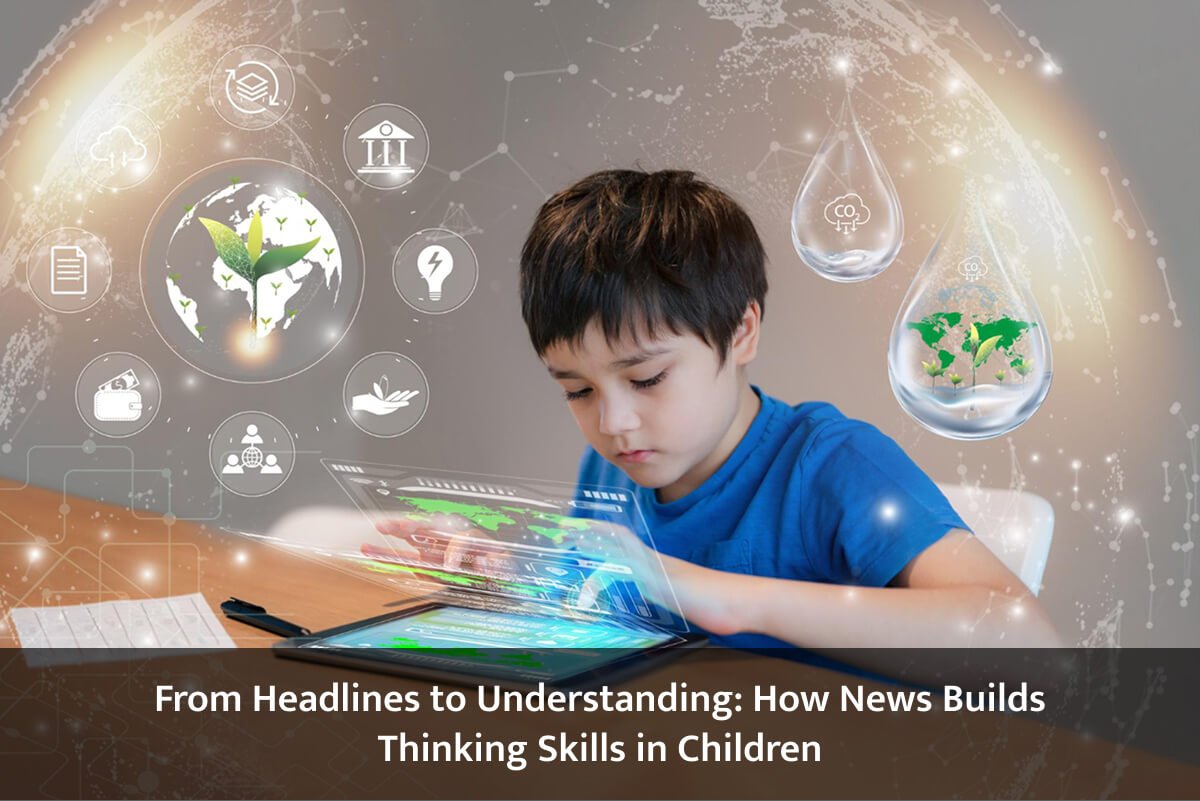
From Headlines to Understanding: How News Builds Thinking Skills in Children
Why News Can Be a Powerful Learning Tool
In many households and classrooms, news is treated as something children should be shielded from—too complex, too disturbing, too “adult.” Yet children grow up in the same world adults do. They hear conversations, see headlines on screens, notice changes around them, and ask questions that deserve thoughtful answers.
When began accompanying care, circumstances, and dialogue, news can combine of ultimate effective tools for education—connecting kids to certain life, maintenance fault-finding thinking, and serving them accept the planet they are before constituent.
Learning does not happen only through textbooks or classrooms. It occurs when infants explain in speech the world about ruling class.
News offers certain-time knowledge. It links youngsters to current events, friendly issues, controlled findings, enlightening changes, and human stories as they unravel. Unlike abstract models, revelation is grounded in reality—it shows offsprings that knowledge matters cause it relates directly to society’s lives, selections, and results. When guided suitably, revelation alters inactive information into significant understanding.
Moving Beyond “Adult Content” Assumptions
News is often labeled as “adult content,” but this assumption overlooks how adaptable information can be.
The issue is not the life of information, but how it is bestowed and explained. When information is contextualized, abstract, and emotionally financed, it maybe age-appropriate and intensely educational. Avoiding revelation completely does not hamper children from attacking the globe’s realities—it only erases the guidance they need to process ruling class harmlessly and helpfully.
How Children Naturally Engage with Current Events
Children are naturally curious about what is happening around them.
They question started by heard conversations, replica on video, or changes they respect in daily existence. They are fatigued to evident nation and real situations—lies of braveness, conflict, change, or community. This interest is not nasty or obtrusive; it is a natural attempt to learn their surroundings. News, when joint thoughtfully, joins absolutely at this moment idea.
From Information to Interpretation
Reading or hearing news is only the first step. Learning begins when children move from information to interpretation.
Headlines provide facts, but understanding requires context, causes, and implications. Helping children interpret news means guiding them to ask what it means, why it matters, and how it connects to other ideas. This shift transforms news from a stream of information into a meaningful learning experience that develops comprehension and insight.
Developing Critical Thinking Through News
News is a powerful tool for developing critical thinking because it presents real-world complexity.
Stories rarely have simple answers. Children learn to analyze situations, consider multiple viewpoints, and understand that issues often involve trade-offs. Through news, children practice reasoning, evaluation, and perspective-building—skills that are essential not just academically, but for responsible citizenship and independent thinking.
Asking Questions, Not Just Consuming Headlines
Passive consumption of news can overwhelm or confuse children. Active questioning turns news into learning.
Encouraging questions like Why did this happen? Who is affected? What might happen next? helps children engage thoughtfully. These questions foster curiosity, empathy, and foresight. They also teach children that understanding is something they build, not something handed to them fully formed.
Understanding Cause and Effect in Real Life
One of the most valuable lessons news offers is cause and effect.
Children see how decisions lead to outcomes—how policies affect communities, how environmental choices impact ecosystems, how actions create consequences. These real-life connections help children understand complexity beyond simplified classroom examples. News makes abstract ideas concrete and relevant.
Building Context and World Awareness
News introduces children to geography, cultures, societies, and civic structures in meaningful ways.
Through current events, children learn where places are, how communities differ, how governments function, and how societies respond to challenges. This builds global awareness and civic understanding—not through memorization, but through lived context. The world becomes a connected system rather than a collection of isolated facts.
Emotional Intelligence Through Real Stories
News stories are ultimately human stories.
When children hear about people affected by events, they practice empathy and perspective-taking. They learn that experiences differ, that emotions matter, and that compassion is important. With adult support, news can help children develop emotional awareness—recognizing feelings in others and understanding their own responses to difficult information.
News as a Bridge Between Classroom and Life
Many academic concepts feel abstract until children see them in action.
News brings subjects like history, geography, science, economics, and civics to life. A climate story connects to environmental science; an election connects to civics; a health report connects to biology. News acts as a bridge, showing children why what they learn in school matters beyond exams.
Learning to Distinguish Facts, Opinions, and Bias
In an age of information overload, media literacy is essential.
News provides an opportunity to teach children the difference between facts and opinions, to recognize bias, and to question sources. Early exposure to these ideas builds healthy skepticism—not cynicism, but discernment. Children learn that not all information is neutral and that thoughtful evaluation is a vital life skill.
The Role of Discussion and Reflection
News should never be consumed in isolation—especially by children.
Discussion allows children to process information, express feelings, and clarify misunderstandings. Reflection helps integrate learning rather than letting stories accumulate emotionally. Conversations transform news from something that happens to children into something they actively make sense of.
Age-Appropriate News and Guided Exposure
Not all news is suitable for all ages, but all ages can engage with news appropriately.
Simplified language, contextual explanations, and emotional reassurance are key. Adults play a crucial role in selecting content, explaining background, and reassuring children when stories are distressing. Guided exposure ensures that learning does not come at the cost of emotional security.
Role of Parents in News-Based Learning
Parents are central to making news a healthy learning experience.
Co-reading or co-watching news creates opportunities for dialogue. Encouraging questions validates curiosity. Providing balanced perspectives prevents fear or polarization. Most importantly, parents help children feel emotionally safe while engaging with the world’s realities.
Role of Educators in Using News as a Resource
Educators can turn news into a powerful classroom resource.
By linking current events to curriculum, teachers make learning relevant. Encouraging debate and reflection helps students articulate ideas respectfully. Teaching critical evaluation equips students with skills they will use far beyond school. When used thoughtfully, news enriches education rather than distracting from it.
FAQs About Children and News Consumption
Many adults have concerns about children engaging with news. These FAQs address common questions in detail.
Q1. Is news suitable for children?
Yes, when it is age-appropriate and guided.
Children are already exposed to fragments of news through conversations, screens, and social media. Avoiding news does not protect them—it leaves them without context. With careful selection and discussion, news can be informative, empowering, and reassuring rather than frightening.
Q2. At what age can children start engaging with news?
There is no fixed age, only readiness and guidance.
Young children can engage with simple, positive news stories. As children grow, complexity can increase gradually. What matters most is adult involvement—explaining context, answering questions, and monitoring emotional responses. Engagement should evolve with the child’s development.
Q3. How does news improve thinking skills?
News improves thinking skills by presenting real-world problems without clear-cut answers.
Children practice analysis, reasoning, and perspective-taking. They learn to connect ideas, evaluate information, and think beyond textbooks. News encourages active thinking rather than passive memorization, which strengthens cognitive flexibility.
Q4. Can news exposure cause anxiety in children?
It can, if exposure is unfiltered or unsupported.
Distressing news without explanation can overwhelm children. However, guided exposure with reassurance helps children feel safe and informed. Adults should check in emotionally, clarify misunderstandings, and emphasize stability and support. The goal is not avoidance, but mindful engagement.
Q5. How can adults guide healthy news consumption?
Healthy guidance involves balance, conversation, and sensitivity.
Adults can select reliable sources, limit exposure to distressing content, and encourage discussion. Asking children how they feel about stories helps process emotions. Modeling calm, thoughtful engagement teaches children how to relate to news responsibly.
Key Takeaways
News, when guided thoughtfully, connects learning to real life.
It builds critical thinking, empathy, and world awareness. Discussion transforms headlines into understanding, while media literacy empowers children to navigate information responsibly. Rather than shielding children from the world, guided news engagement helps them grow into informed, thoughtful, and emotionally resilient individuals.

Leave a Reply